

Request lifecycle
Move from intake to dispatch to closeout without breaking the record.
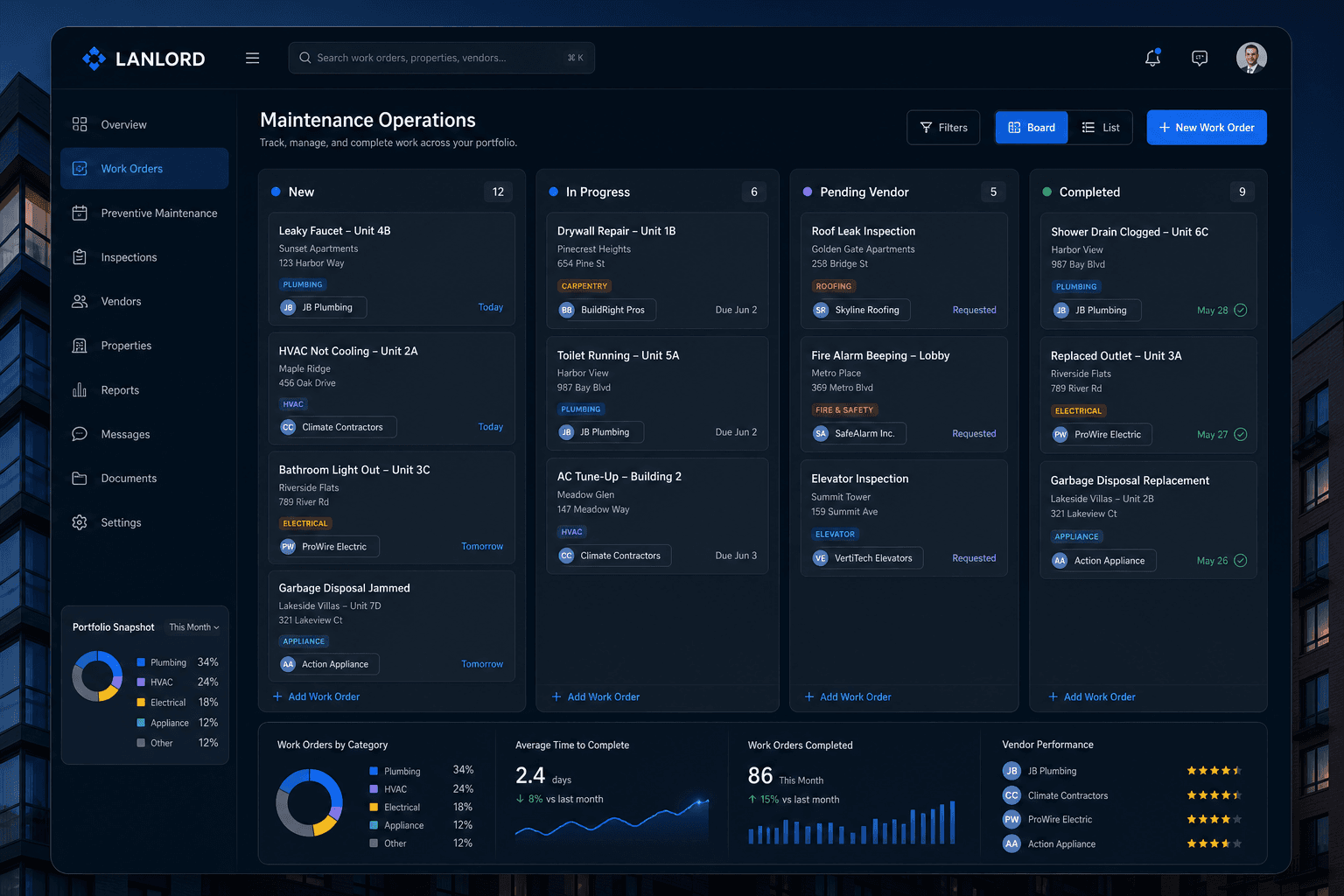
Maintenance drives resident experience, cost control, and property performance, which means the workflow needs more than a simple request inbox.
Recurring issue visibility that helps teams address root causes instead of symptoms
Faster dispatch and follow-up because the request already knows the property and tenancy context
Repair trails that make future budgeting and owner reporting more credible
Issue visibility
Open, urgent, recurring, and aging work stays visible
Vendor context
Assignments, notes, and history stay tied to the repair record
Cost discipline
Operators can spot where maintenance is compounding into drag
Maintenance control
Lanlord keeps requests, vendor work, property history, and financial impact tied together so maintenance improves over time instead of repeating the same mistakes.
Capture issue history and recurrence, not just the latest task
Track vendor execution alongside resident and property context
Connect repair decisions to cost trends and property health
Each page explains the operating sequence, not just a bucket of features.
Step
Requests begin with the tenant, unit, property, and known issue history already in view.
Step
Teams can assign vendors, coordinate updates, and manage urgency without losing the property story.
Step
Completed work feeds the asset record so repeat failures, expensive properties, and poor vendor patterns are easier to see.
It affects renewal quality, vacancy speed, and portfolio reputation directly
It is one of the easiest places for cost leakage and avoidable repeat work to hide
The same issue data informs property, tenant, and financial decisions downstream
Move from intake to dispatch to closeout without breaking the record.
Use repair history to understand which assets are stable and which keep slipping.
Tie work outcomes to property-level cost patterns instead of treating them as isolated invoices.
See how Lanlord turns requests, vendors, and repair history into a stronger operating loop.